
Sports Photography at the Commonwealth Games: Behind the Scenes at Glasgow 2026
Four years after photographing my first Commonwealth Games in Birmingham in 2022, I had the opportunity to return to the Games — this time in Glasgow.
Glasgow 2026 was a very different experience. It was a more compact edition of the Commonwealth Games, with a smaller programme of sports. Many of them were events I had photographed before, but there were still opportunities to experience something new, including covering lawn bowls and 3×3 basketball.
More importantly, I was returning with another four years of experience behind me.
Over the years, my work as a sports photographer has taken me across different international sporting events, and each assignment has changed the way I approach the next one. It isn’t simply about becoming faster with a camera or knowing which settings to use. I have become more deliberate about the equipment I carry, where I position myself, the moments I look for and how I plan my workflow before the competition even begins.
Glasgow was another opportunity to put all of that experience into practice.
Planning a Major Sports Photography Assignment
One thing people don’t always see about photographing a major Games is how much work happens before the first photograph is taken.
After arriving in Glasgow and checking into my accommodation, one of my first priorities was getting my accreditation sorted. From there, it was off to the media centre and Nikon depot to collect the equipment I needed for the assignment.
Then came the logistics.
With competitions taking place across different venues, I needed to understand how I was going to get from one location to another, how long each journey would take and how that fitted into the competition schedule.
Google Maps became as important to the planning process as my camera bag.
At the media centre, we would also go through the start lists and identify the athletes we needed to photograph. Knowing who I was covering, their lane or competition order and when they were appearing allowed me to start planning before I even reached the field of play.
At a major multi-sport event, a lot of photography comes down to being in the right place at the right time.
Getting there is part of the job.
Photographing Sports Inside a Major Games
Working at a major international sporting event is quite different from the sports photography assignments I cover in Singapore, where access and shooting positions can sometimes be much more flexible.
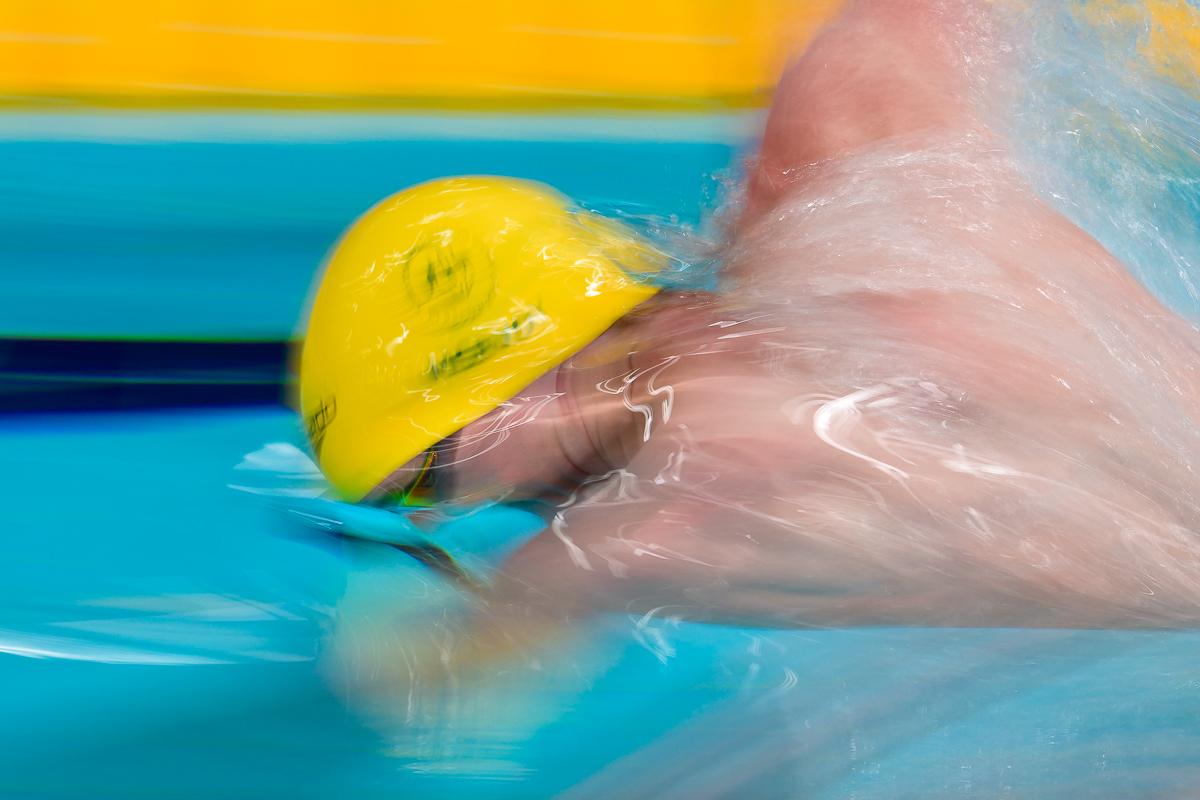
Take swimming as an example.
At some local competitions, I may have considerably more freedom to move around and experiment with different positions. If I see an interesting angle, I can sometimes move and try something different.
At a major Games, the environment is much more controlled.
There are designated media positions, field-of-play restrictions and a large broadcast operation happening at the same time. Accredited photographers cannot simply walk wherever they want, and once you commit to certain positions, moving during competition may not be possible.
That means some of the most important decisions are made before the athlete even appears.
I normally arrive early enough to scout the available photography positions. From there, I look at the start list, identify where the athlete I need to photograph will be competing and decide which position gives me the best opportunity.
Sometimes that means choosing one photograph at the expense of another.
You learn to anticipate.
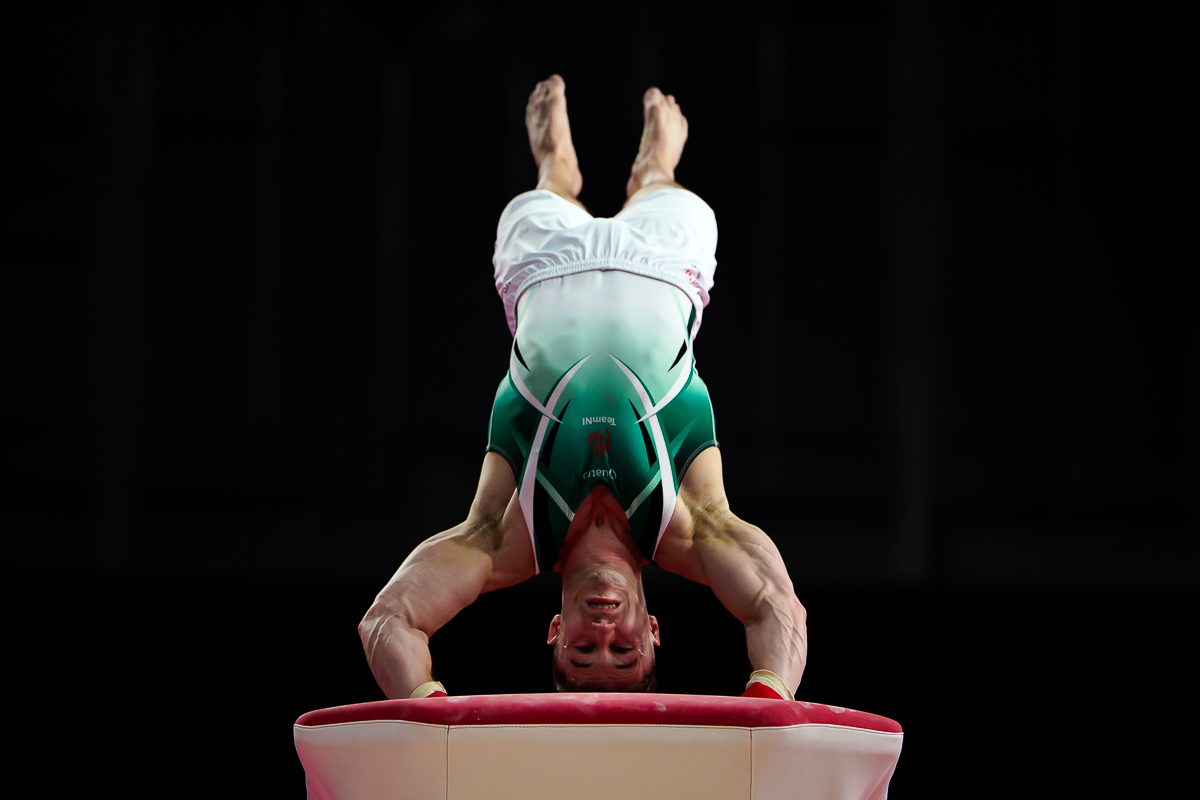
The straight-on position I chose for this vault photograph, for example, gave me a very specific perspective as the athlete launched from the vault. Choosing that position was part of creating the photograph long before I pressed the shutter.
And not every venue gives you the angle you imagined beforehand.
Sometimes the stadium configuration is different. Sometimes your preferred position isn’t available. Sometimes another photographer is already occupying the space.
Experience doesn’t remove these limitations. It teaches you how to work around them.
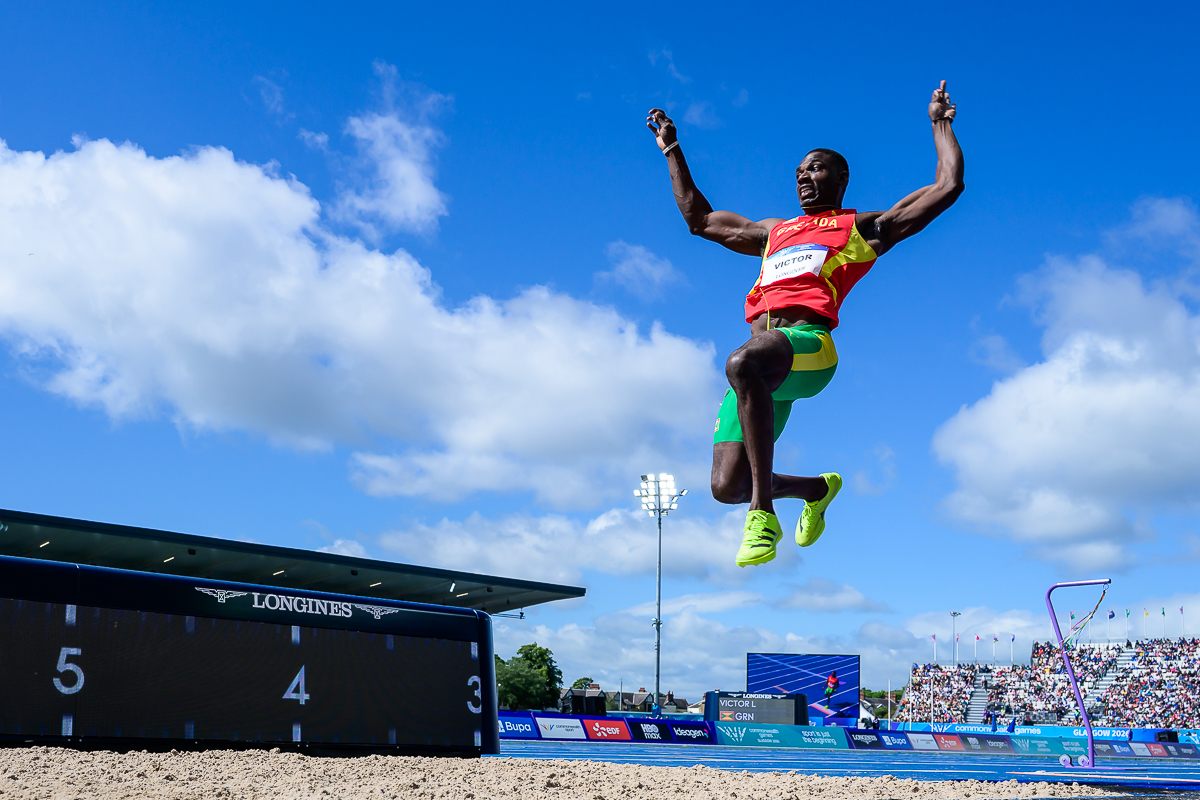
At other times, the environment gives you something unexpected. A clear sky, moving clouds or a clean background can completely change the feel of an image. Part of the challenge is recognising those opportunities while they are there.
Choosing Camera Gear for Sports Photography
For major sporting assignments, I generally prefer working with three camera bodies covering three different focal-length ranges.
A 24–70mm and 70–200mm are two lenses I will almost always have with me. They cover a large part of what I need, from wider environmental photographs to tighter action and reaction shots.
I will also normally have an ultra-wide-angle lens in the bag for situations where I want to show more of the venue or create a very different perspective.
The bigger decision is usually the super-telephoto.
Do I need a 300mm? A 400mm?
There isn’t one answer that works for every sport.
This is where previous experience becomes particularly useful. Having photographed many of these sports before, I have a better understanding of how far away I am likely to be, where the photography positions normally are and what type of images I want to create.
Instead of carrying everything simply because I might need it, I can make a more informed decision before heading to the venue.
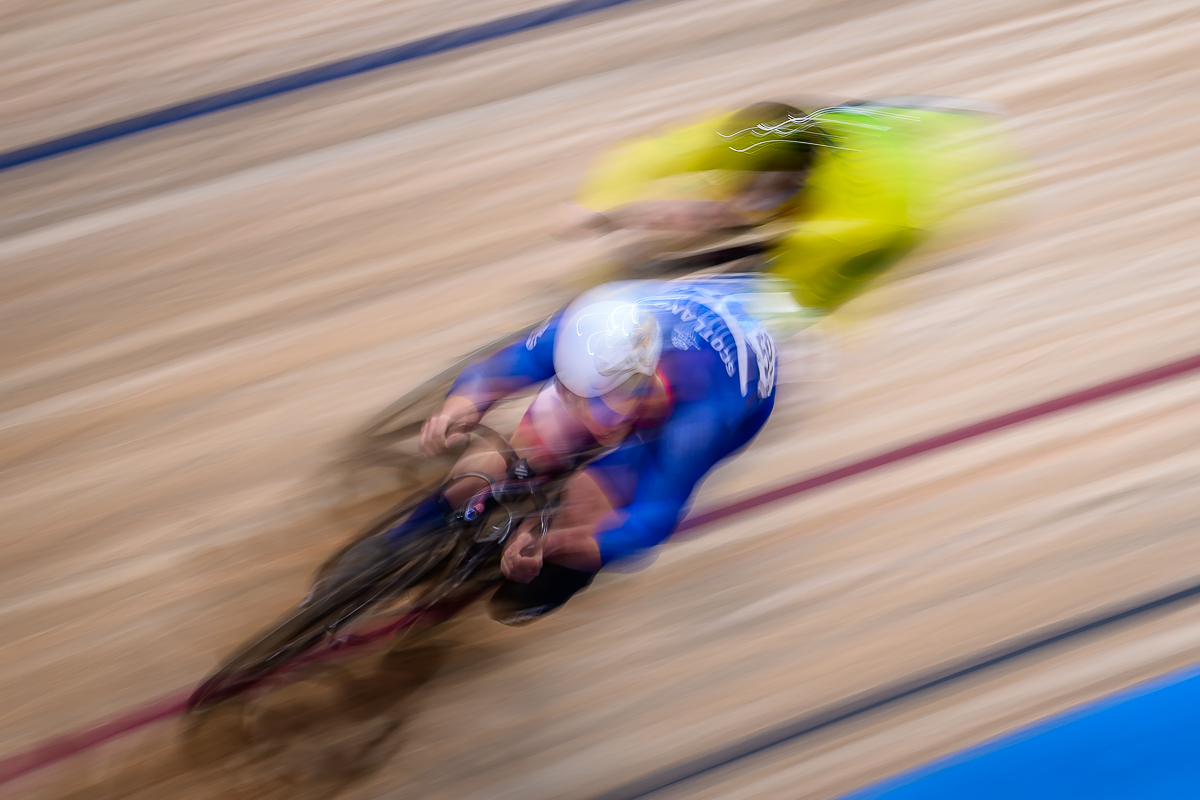
Different sports also require very different ways of seeing.
A longer focal length can isolate athletes and bring the competition closer, while sometimes going in the opposite direction creates the more interesting photograph.
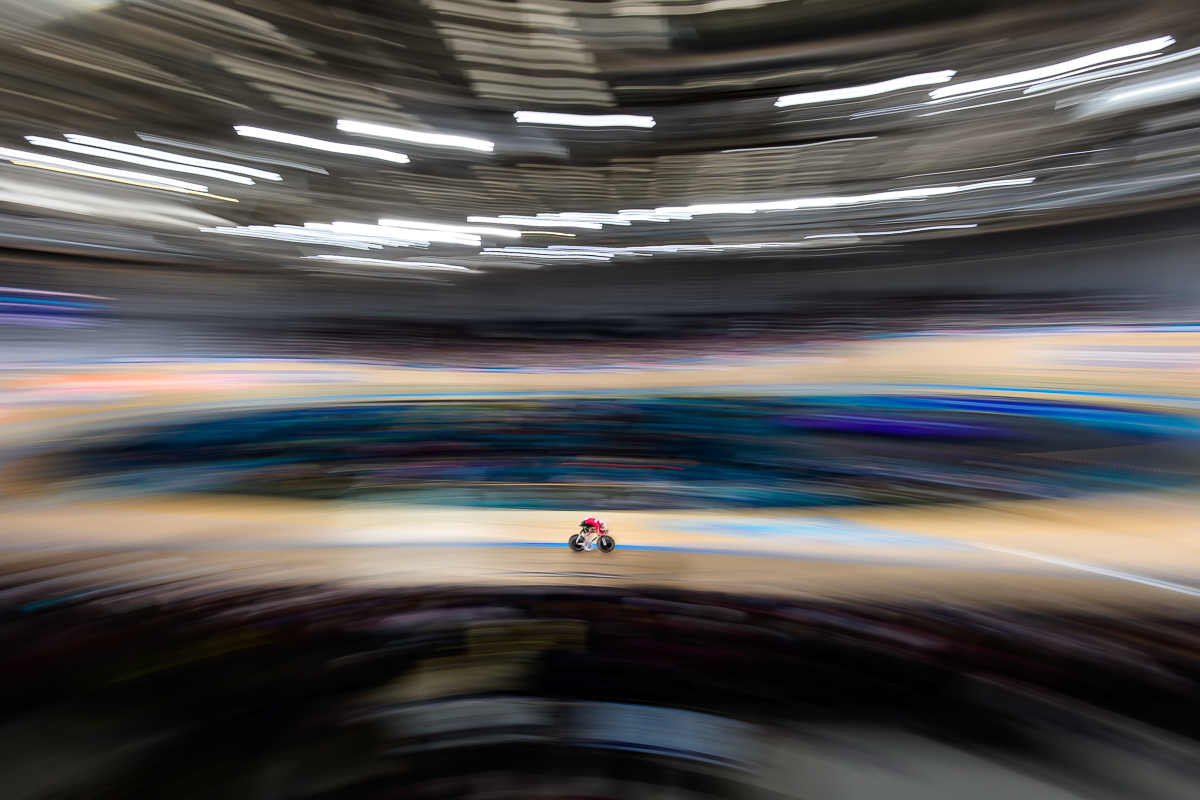
For this cycling image, I chose a wider perspective and panned with the cyclist instead. Rather than simply freezing the athlete, the movement surrounding him became part of the photograph.
Equipment is important, but knowing why I am choosing a particular lens has become far more important to me than simply carrying more equipment.
Sports Photography Is More Than Peak Action
Everyone loves a great action photograph.
A punch connecting. An athlete suspended in the air. A race decided at the finish.
Those are the moments sports photographers are always looking for.
This approach to visual storytelling is something I bring across my professional sports photography coverage, whether I am photographing an international Games or a sporting event back home in Singapore.
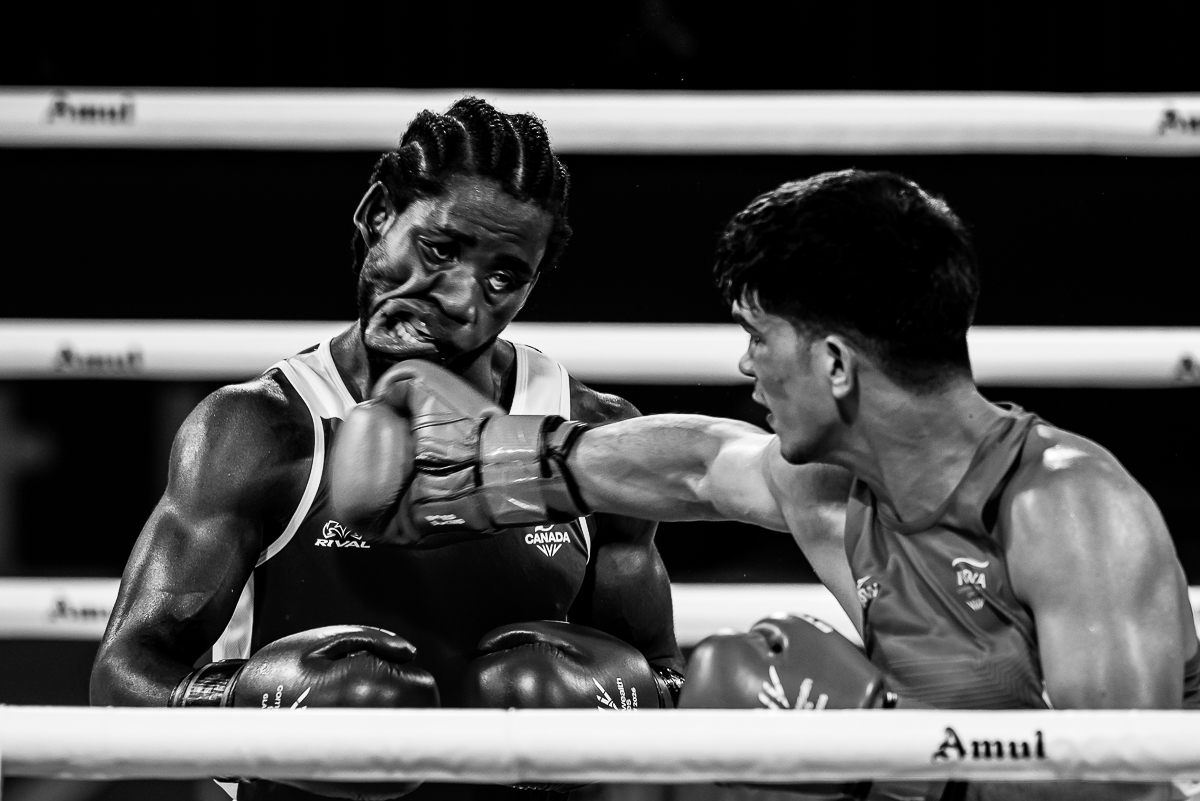
Sometimes everything comes together for that fraction of a second. In boxing, the difference between an ordinary frame and an impactful photograph can literally be the instant the glove connects.
But a sporting event isn’t made up only of peak action.
Over the years, I have become increasingly conscious of photographing the smaller moments surrounding the competition as well.
Athletes warming up.
Preparing before their event.
Talking to their coaches.
Watching their opponents.
Reacting after a performance.
Singapore supporters in the stands.
And, when everything comes together, the medal ceremony.
These photographs help complete the story.
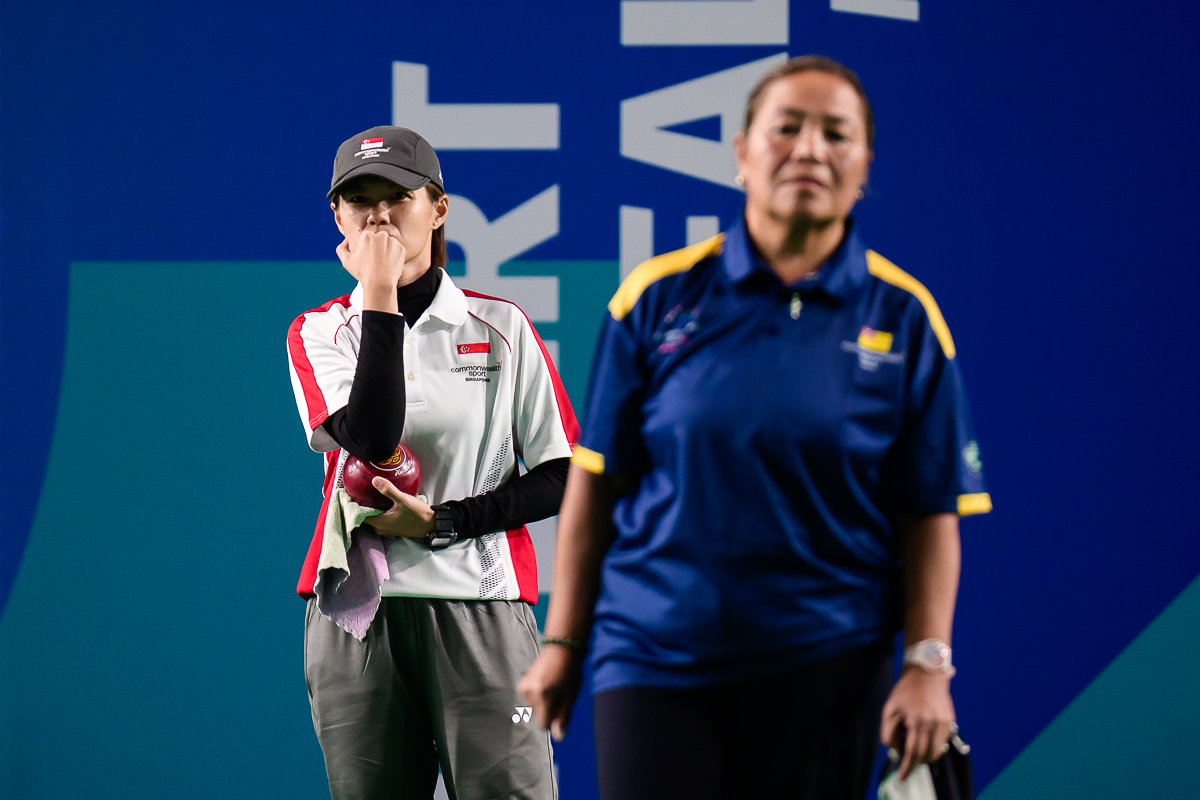
Lawn bowls was one of the sports I had the opportunity to photograph in Glasgow, and one of my favourite photographs from the Games wasn’t an explosive action frame at all.
Our Singapore athlete had her chin resting against her fist while watching the play, while her opponent leaned across in front of her following the bowl.
Both athletes appeared completely absorbed in what was happening.
It was a quiet moment, but it communicated something important about the sport: concentration, calculation and strategy.
Sometimes the photograph doesn’t need spectacular action to tell you what an athlete is experiencing.
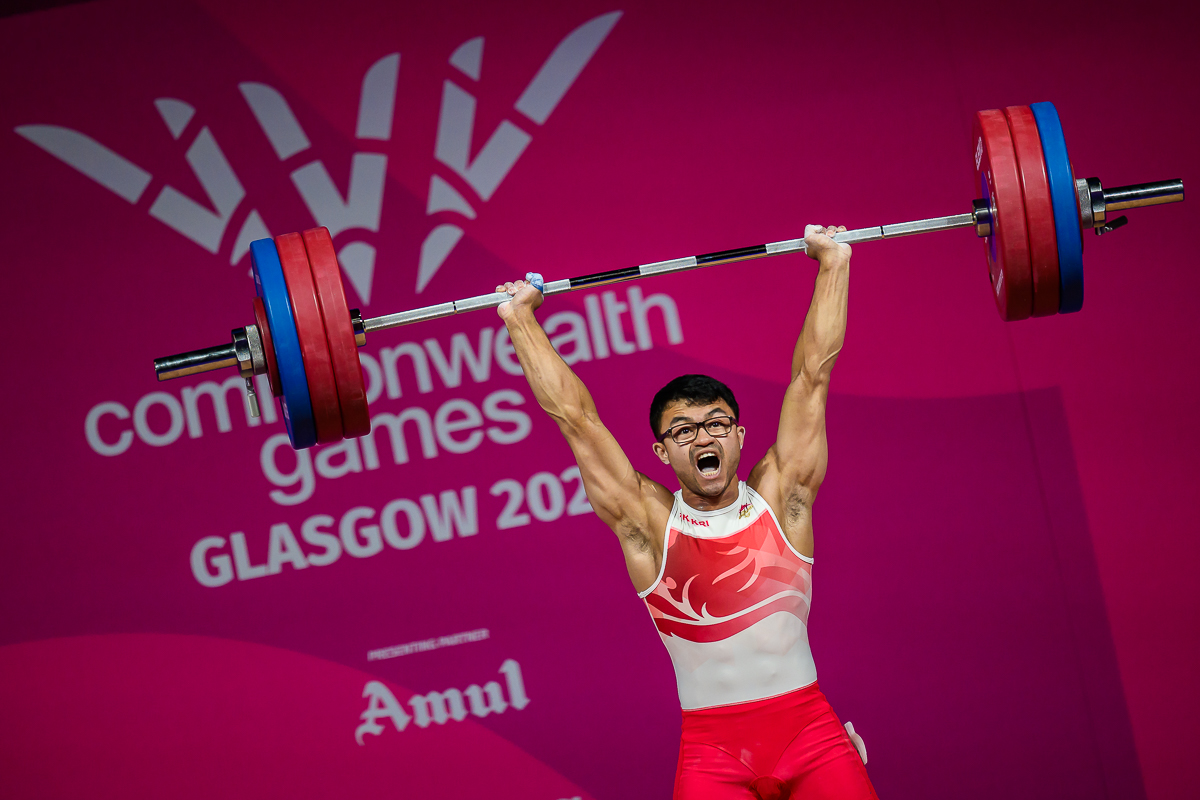
Expression can be just as important. The intensity on an athlete’s face after completing a lift can sometimes communicate more about the effort involved than the lift itself.
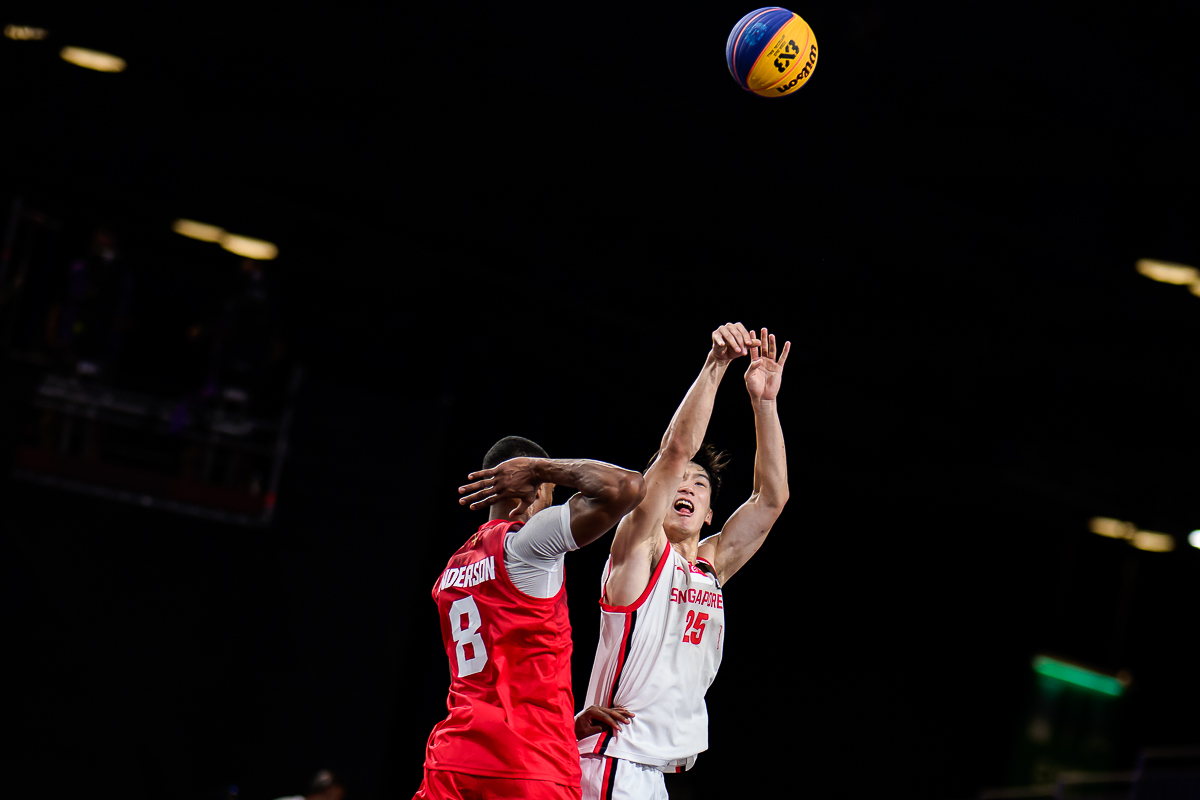
And Glasgow still gave me opportunities to photograph sports that felt different from my usual assignments. With the dark background, the Singapore athlete attempting a three-pointer and the defender reaching to stop the shot, 3×3 basketball produced a very clean visual environment for action photography.
Delivering Sports Images Under Tight Deadlines
Once the photograph has been captured, another race begins.
Major Games usually mean long working days.
I may start early in the morning for the first competition session, finish the morning assignment, have only a short window in the afternoon and then head back out for another afternoon or evening session.
Sometimes there isn’t even time to return to the media centre.
Once I have photographed the athlete I need, I may have to leave immediately for another venue.
That means travelling time becomes editing time.
While moving between venues, I can be selecting photographs, making adjustments, preparing captions and transmitting images to my client.
And delivering photographs from a major sporting event isn’t simply a matter of exporting a JPEG and sending it.
There is information that needs to accompany the photographs. Athlete names need to be correct. The event, date and other relevant caption information need to be included.
Speed matters, but accuracy matters too.
My workflow today is something that has taken years to refine.
Every Games teaches me something. Camera technology changes. New features become available. Transmission options improve. I experiment with different workflows and gradually remove the little bottlenecks that slow me down.
The goal isn’t simply to shoot faster.
It is to get a strong photograph from the camera to the client as efficiently and reliably as possible.
Photographing Sports in Challenging Weather
Perhaps one of the biggest lessons I’ve learnt from photographing international sporting events came before Glasgow.
It came at the Paris 2024 Olympic Games.
Coming from Singapore, rain itself isn’t unfamiliar to me. But photographing outdoors through prolonged cold and wet weather was a very different experience.
Before Paris, I thought I was prepared for rain.
Paris taught me that I wasn’t as prepared as I thought.
There is a big difference between expecting a shower and being prepared to work outdoors when the rain continues for hours.
That experience changed the way I prepared for Glasgow.
The weather in Scotland was colder than I had expected, and during one athletics session, the rain came down extremely heavily.
Competition continued.
I was there covering Singapore sprinter Shanti Pereira, sitting out in the cold and rain with my cameras while also having a remote camera positioned around the finishing line.
This time, however, I was ready.
I had rain protection from top to bottom. My cameras were protected. The remote setup was protected.
I was still cold. I was still getting drenched.
But I could continue working.
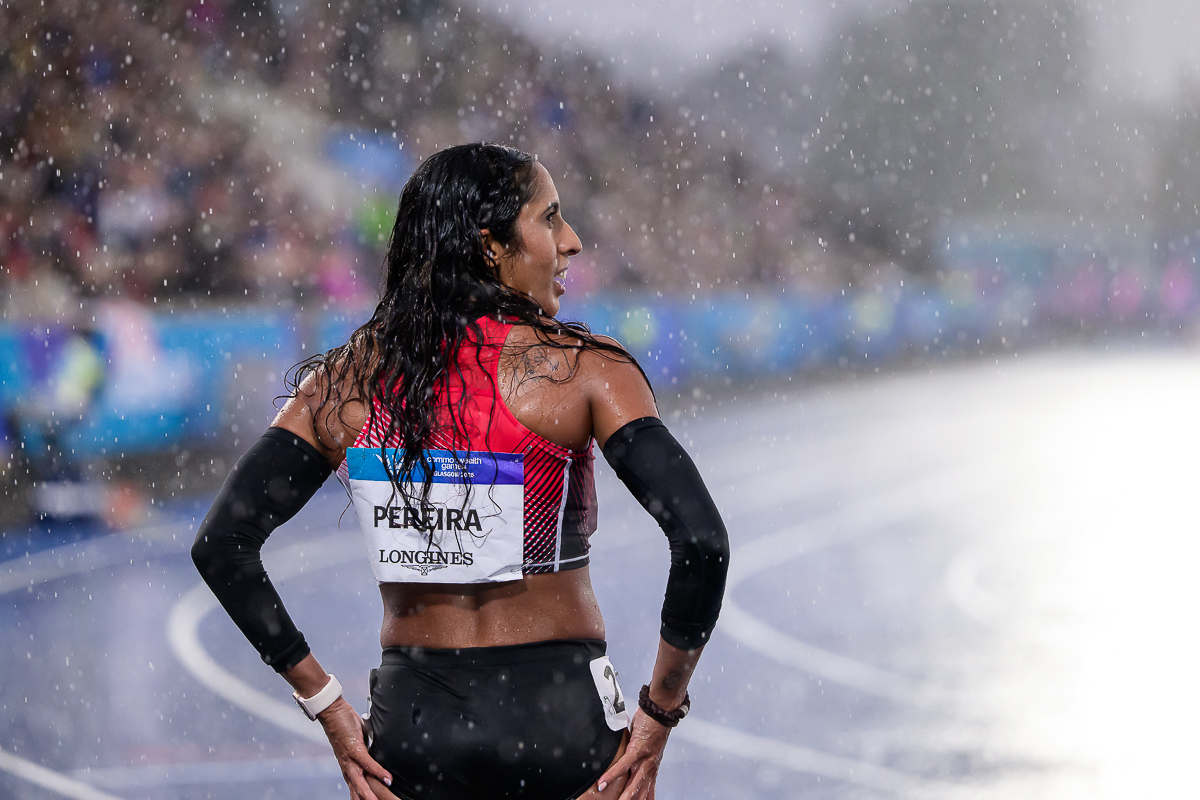
And strangely enough, those terrible conditions gave me one of the photographs I loved from Glasgow.
The heavy rain completely changed the atmosphere of the image. It didn’t look like another athletics photograph made on a normal dry day. The weather became part of the story.
That is something I’ve grown to appreciate about sports photography.
Sometimes the conditions that make your job more difficult are also the conditions that give you something different to photograph.
What Glasgow 2026 Taught Me About Sports Photography
Looking back at Birmingham 2022, Paris 2024 and now Glasgow 2026, I don’t think experience means reaching a point where everything becomes predictable.
Quite the opposite.
Every major Games presents a new challenge.
The weather changes. Venues change. Photography positions change. Schedules change. Sometimes the angle you planned for simply isn’t possible.
What experience gives me is a better ability to respond when those things happen.
I understand my equipment better. I have a clearer idea of what I need to carry. I scout positions differently. I look beyond the obvious action. My workflow has become faster, and I am much more conscious of preparing for situations that I cannot control.
There will always be another photograph I haven’t thought of and another problem I haven’t encountered.
And perhaps that is one of the reasons I still enjoy photographing major sporting events.
Every Games gives me another opportunity to learn, adapt and find a different way of telling the story.
Beyond international competitions such as the Commonwealth Games, Olympic Games and Asian Games, I also provide sports photography in Singapore for sporting events, organisations and brands looking for professional event coverage.
You can explore more of my sports photography work and coverage experience on my Sports Photography Singapore page.